Cleaning Moss Off a Flat or Low-Pitch Roof
You look out of an upstairs window onto the flat roof of your extension and see it's gone green and patchy, with puddles that never seem to dry. Your kitchen extension, garage, or dormer roof was fine a couple of years ago, and now moss is spreading across it and the surface looks tired. It's easy to ignore because you rarely walk on it, but a flat roof needs care just as much as a pitched one.
Flat and low-pitch roofs have their own quirks. Water sits on them instead of running straight off, so moss and algae take hold quickly, and the coverings used, felt, rubber, or fibreglass, are softer and easier to damage than tile. Across the West Midlands, where so many homes have added a flat-roofed extension or garage, this is a common sight. Here's how to clean one properly without causing harm.
The quick answer: Clean a flat or low-pitch roof gently with low-pressure methods and a suitable treatment, clear the outlets so water drains, and never scrape or jet at felt, rubber, or fibreglass coverings.
1. Why flat roofs grow moss so fast
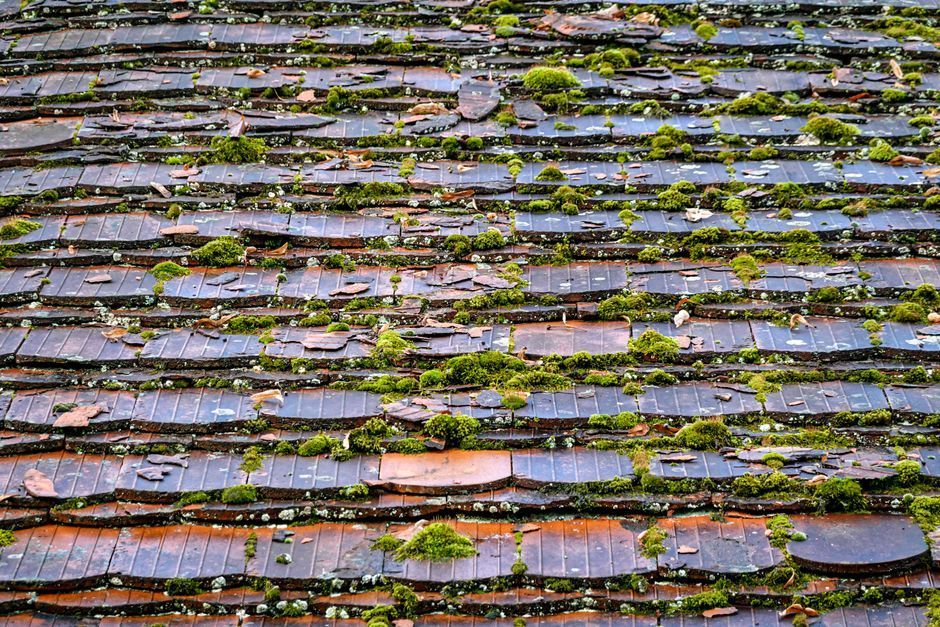
The clue is in the name. A flat or gently sloping roof doesn't shed water the way a steep pitch does, so rain lingers in shallow puddles and damp patches long after it stops. That standing water is exactly what moss and algae need, and they colonise the surface far quicker than they would on a well-drained tiled roof.
Our climate makes it worse. The West Midlands sits inland with cool, wet weather and long damp spells, so a flat garage roof in Walsall or a kitchen extension in Coventry rarely gets a proper chance to dry out. Add a bit of shade from the house or a neighbouring wall, and the green spreads across the whole surface within a season or two.
2. Know your covering before you start
Flat roofs come in a few materials, and each behaves differently. Traditional felt is the most common on older extensions and garages, and it's easily torn or scuffed. Rubber membranes like EPDM are tougher but can be punctured, and fibreglass has a coating that scrubbing or harsh chemicals can wear through. Knowing which you've got shapes how you clean it.
This matters because the wrong approach ruins the very thing keeping water out. A flat roof relies on an unbroken surface, so a single tear or worn patch becomes a leak. On the many post-war and later extensions across Birmingham and Dudley, that covering may already be ageing, which means it needs an even gentler touch.
3. Gentle cleaning is the only safe way
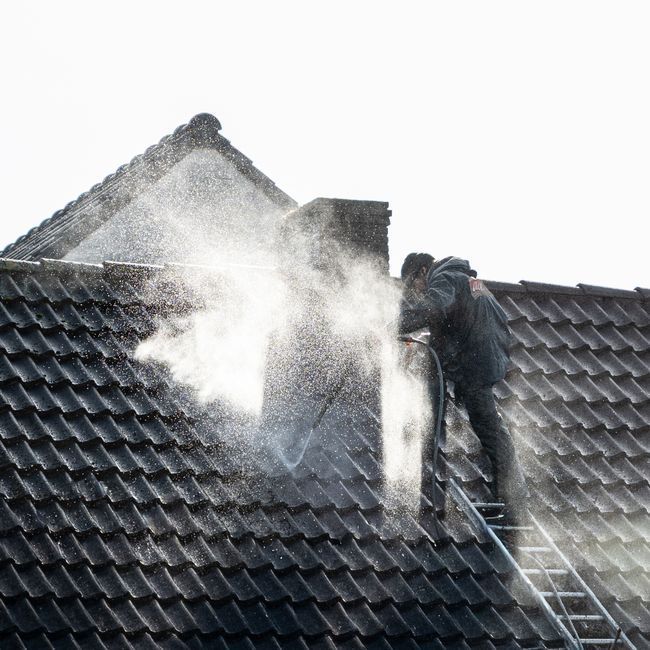
Forget the pressure washer. On a flat roof, a high-pressure jet can lift the edges of felt, force water under the membrane, and cut straight through a worn surface. The safe method is low-pressure, using a soft brush and a suitable cleaning solution to lift the moss and algae without attacking the covering underneath.
A proper treatment does the heavy lifting here. Rather than scrubbing hard, the right biocide kills the moss and algae so it can be cleared away gently and is slower to return. This is the same soft-wash thinking used on tiled roofs, adjusted for the softer, more vulnerable surface of a flat roof.
4. Clear the drainage while you're there
A flat roof lives or dies by its drainage. The outlets, gullies, and any small gutters around the edge have to stay clear, or water pools and the moss problem gets worse. Moss, leaves, and grit all gather around these outlets and block them, which is why clearing them is a key part of cleaning a flat roof.
Standing water is the enemy. Once it can't drain, it soaks into any weak spot in the covering and speeds up both the moss growth and the wear on the surface. On a terraced house in Wolverhampton with a flat-roofed rear extension, a blocked outlet can leave a puddle sitting for weeks, so keeping the drainage flowing protects the whole roof.
5. Watch your footing and the surface
Flat roofs feel walkable, which is part of the danger. A wet, mossy felt or rubber surface is slippery, and the edges often have no guard, so a slip can mean a fall. Some flat roofs, especially older garages, also have coverings that won't reliably take your weight in a soft or worn spot.
Then there's the damage you can do just by walking on it. Grit underfoot can scuff and tear a soft covering, and concentrating your weight in one place stresses the surface. This is where professional help pays off, spreading the load properly, working safely near unguarded edges, and knowing which parts of an ageing roof to keep off entirely.
6. Keeping a flat roof clear for longer
Once it's clean, a little routine keeps a flat roof in good shape. A treatment applied after cleaning slows the moss and algae coming back, and a check once or twice a year catches problems early. Keeping the outlets clear, particularly after autumn, stops water pooling and undoing the good work.
Regular attention is far cheaper than a new roof. A flat covering that's kept clean and draining freely lasts a good deal longer than one left under moss and standing water. Given how many homes across the region rely on flat-roofed extensions and garages, a bit of upkeep protects a part of the house that's easy to forget until it leaks.
- Standing water: Flat roofs hold moisture, so moss and algae take hold faster than on a pitched roof.
- Covering type: Felt, rubber, and fibreglass each need care, and all are easily damaged by rough treatment.
- Low pressure only: A soft brush and treatment clear the moss; jetting tears the surface and causes leaks.
- Drainage: Keep outlets and gullies clear so water drains instead of pooling and feeding more moss.
- Footing: Wet surfaces are slippery and edges are often unguarded, so safe access matters.
Frequently Asked Questions
Can I pressure wash a flat roof?
No. High pressure lifts felt edges, punctures membranes, and forces water underneath, causing leaks. A flat roof needs low-pressure cleaning with a soft brush and a suitable treatment instead.
Why does moss grow so much faster on my flat roof?
Because water sits on it rather than running off. That standing moisture, combined with our damp climate, is ideal for moss and algae, so a flat roof greens up quicker than a steeper one.
Is moss actually damaging my flat roof?
Yes, over time. Moss holds moisture against the surface, which speeds up wear and can work into any weak spot. Left alone, it shortens the life of the covering and can lead to leaks.
Do I really need to clear the drainage outlets?
Very much so. Blocked outlets leave water pooling, which worsens the moss and soaks the covering. Clearing them is one of the most important parts of looking after a flat roof.
Should I walk on my flat roof to clean it?
Be careful. Wet, mossy surfaces are slippery, edges are often unguarded, and older coverings may not take your weight safely. If you're unsure, it's a job better left to someone with the right access equipment.
Got a mossy flat roof or extension?
Ben's Roof Cleaning carries out safe, low-pressure roof cleaning, moss removal, and gutter cleaning across the West Midlands, with over 15 years of experience. Get in touch or call 0788 912 7153
for a free, no-obligation quote.
A flat roof rewards a gentle, steady hand
Flat and low-pitch roofs ask for a different kind of care than the pitched roof over your main house. They hold water, grow moss fast, and wear coverings that can't take a scrubbing. Clean them gently, keep the drainage flowing, and treat the surface to slow the moss, and that extension or garage roof will keep doing its job for years. Ignore it, and the standing water and green creep quietly shorten its life.